by
A digital arrest scam is one of the most frightening cyber frauds in India today. A caller pretends to be from the police, CBI, ED, customs, the narcotics bureau or even a court, accuses you of a serious crime and keeps you on a video call for hours, saying you are under “digital arrest” until you pay. Many educated professionals, retired officers and senior citizens have lost their life savings this way.
The most important fact to remember is simple: as the Indian Cyber Crime Coordination Centre (I4C) has clearly advised, CBI, police, customs, ED or judges do not arrest anyone on a video call. This guide explains how a digital arrest scam works, the warning signs, 10 easy ways to stay safe and exactly what to do if you or a family member is targeted.
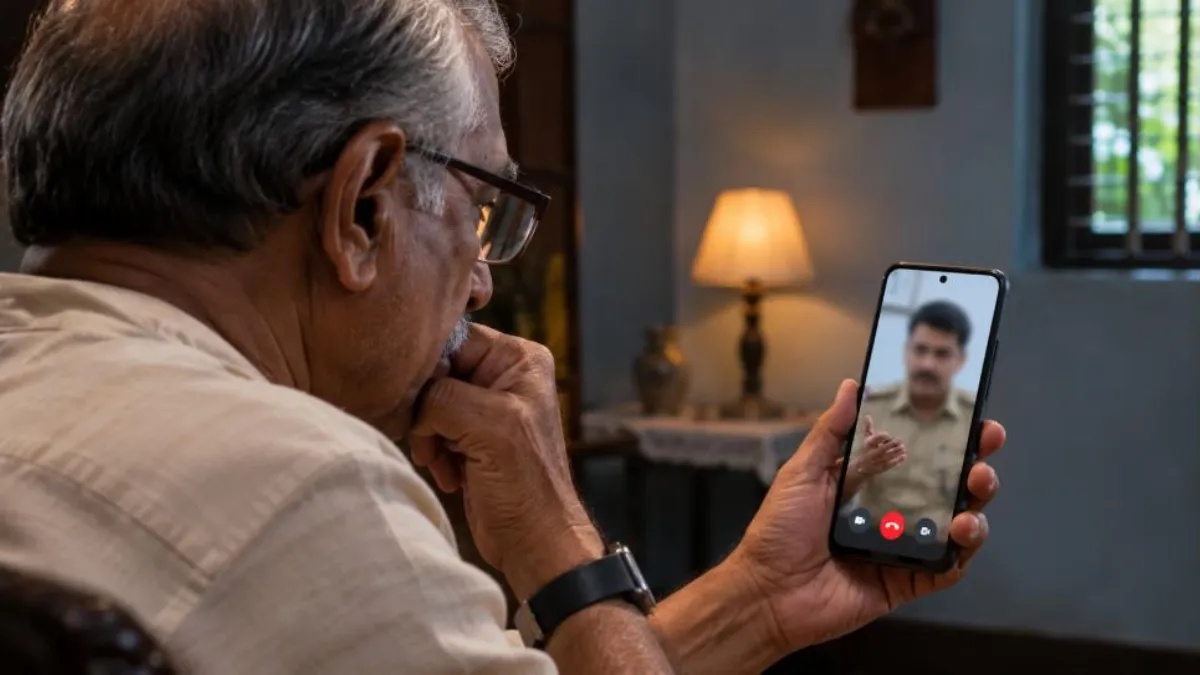
Table of Contents
Share this guide with parents and elderly relatives. Awareness is the strongest protection against a digital arrest scam.
What Is a Digital Arrest Scam?
A digital arrest scam is a cyber extortion fraud in which criminals impersonate law enforcement officials using phone calls, WhatsApp or Skype video calls, fake uniforms, fake police station backgrounds and forged documents. They tell the victim that a parcel in their name contains drugs, that their Aadhaar or SIM card has been misused for money laundering, or that a family member has been caught in a crime. The victim is told not to disconnect, not to tell anyone and to stay in front of the camera, which the fraudsters call “digital arrest”. Finally, they demand money to “verify” funds, pay a “security deposit” or settle the case.
There is no such thing as a legal digital arrest in India. Any call that says you are under digital arrest is a scam.
How the Digital Arrest Scam Works: Step by Step
- The first call: An automated or live call claims to be from a courier company, telecom regulator or bank, saying there is a problem with a parcel, SIM or account in your name.
- The transfer: You are “connected” to a fake police officer or investigating agency.
- The accusation: They say your Aadhaar was used to send illegal items, open bank accounts for money laundering or register SIM cards used in crimes.
- The video call: They move to a video call where a person in uniform sits in what looks like a police station or office. Fake ID cards, arrest warrants and court orders are shown.
- Isolation: You are told the matter is confidential, that you must not speak to family or lawyers and must keep the camera on.
- Fear and pressure: They threaten immediate arrest, media exposure or harm to your children.
- The demand: You are asked to transfer money to a “safe” or “RBI verification” account, break fixed deposits, take loans or share bank details.
- Disappearance: Once money is transferred, it is quickly moved through many mule accounts, and the callers vanish.
Warning Signs of a Digital Arrest Scam
| Red flag | Why it is a scam |
|---|---|
| Arrest or interrogation on a video call | Indian agencies do not arrest or question people this way |
| Demand to keep the call secret | Real investigations allow you to inform family and lawyers |
| Request to transfer money for “verification” | No agency asks you to move money to prove innocence |
| Threats of immediate arrest unless you pay | Legal processes involve written notices and courts, not payments |
| Calls from unknown or international numbers on WhatsApp | Official notices are not issued through WhatsApp video calls |
| Documents shared as photos on chat | Fake warrants and letters are easy to create |
| Pressure not to disconnect for hours | A classic tactic to stop you from checking the facts |
10 Easy Ways to Stay Safe From a Digital Arrest Scam
1. Remember the golden rule
No police officer, CBI, ED, customs officer or judge arrests anyone over a video call. The moment someone says “digital arrest”, you know it is a digital arrest scam.
2. Disconnect immediately
You are under no obligation to stay on the line. Hang up, even if the caller threatens you. Real officers will not chase you on WhatsApp.
3. Never transfer money to “prove” innocence
No genuine investigation asks you to move funds to a “safe account”, “RBI account” or “verification account”. Do not break FDs, sell gold or take loans because a caller told you to.
4. Talk to family and a trusted person at once
Fraudsters depend on isolation. Tell your spouse, children or a friend immediately. A second opinion breaks the fear cycle within minutes.
5. Verify through official channels
If you are worried that a case is real, call your local police station using a number you find yourself, not one given by the caller. In Kerala, you can also use the official Kerala Police app; see our guide to the Pol-App Kerala Police app.
6. Do not share personal or banking details
Never share OTPs, UPI PINs, net banking passwords, Aadhaar copies, PAN or bank statements with a caller. A digital arrest scam often begins with “verification” of your Aadhaar and ends with a full bank transfer.
7. Do not install apps a caller asks for
Scammers may ask you to install screen-sharing or remote access apps so they can “monitor” you. Refuse. These apps let them see your screen, OTPs and banking apps.
8. Report suspicious calls on Chakshu
Report the number on the Chakshu facility of the Sanchar Saathi portal, which lets citizens flag suspected fraud calls, SMS and WhatsApp messages. Our guide to the Sanchar Saathi app explains how to use it.
9. Use privacy settings on WhatsApp
Turn on “Silence unknown callers” in WhatsApp privacy settings, set profile photo and last seen to “My contacts”, and block and report suspicious numbers. This cuts down unexpected video calls from strangers.
10. Educate elders and keep a family code
Senior citizens are frequent targets of the digital arrest scam. Sit with your parents and explain the golden rule. Agree on a family code word or a rule that anyone claiming an emergency must be verified by calling another family member first.

What to Do If You Are Targeted
If you receive a digital arrest scam call, act calmly and quickly:
- End the call. Do not argue or try to outsmart the caller.
- Take screenshots of the number, profile, messages and any documents they sent.
- Block and report the number on WhatsApp and on the Chakshu portal.
- Inform family and your local police station.
- Check your bank accounts for any unknown transactions.
What to Do If You Have Already Paid
Time is critical. The faster you report, the better the chance that banks can hold the money before it moves through more accounts.
- Call 1930 immediately. This is the national cybercrime helpline for financial fraud.
- File a complaint on the National Cyber Crime Reporting Portal with transaction IDs, account numbers, UPI IDs, dates and screenshots.
- Call your bank’s customer care and ask them to freeze or flag the transactions and block your cards and net banking if needed.
- Visit the police station or cyber cell with printed evidence and the complaint acknowledgement number.
- Change passwords for banking, email and UPI apps, and uninstall any remote access app you installed.
- Keep all records safely for follow-up.
Common Stories Fraudsters Use
| Story | What they claim | The truth |
|---|---|---|
| Courier parcel | A parcel in your name had drugs or fake passports | Courier companies do not transfer you to police on a call |
| Aadhaar misuse | Your Aadhaar opened accounts used for money laundering | Agencies send formal notices; they do not demand money on calls |
| SIM card misuse | Your number will be blocked because it was used in crimes | Telecom disconnections do not involve police video calls |
| Family member arrested | Your son or daughter is in custody and needs bail money now | Call the family member directly; real bail goes through courts |
| Fake court hearing | A “judge” appears on video and orders payment | Courts do not hold hearings on WhatsApp or ask for transfers |
Why Even Smart People Fall for It
A digital arrest scam is designed to overwhelm reasoning. The criminals use fear, authority and urgency together. They keep victims on calls for hours, sometimes days, and do not let them sleep or speak to anyone. They often know personal details from leaked data, which makes the call feel real. Professionals, doctors, engineers and retired officials have all been victims. Falling for such a scam is not a sign of foolishness; it is the result of carefully planned psychological manipulation. That is why talking about it openly at home matters so much.
Protecting Senior Citizens
- Save important numbers, such as 1930 and your local police station, on their phone.
- Enable transaction alerts and lower daily UPI and net banking limits on their accounts.
- Ask the bank to add you as a nominee or trusted contact where available.
- Tell them to call you before making any large transfer requested by anyone over the phone.
- Remind them that no government officer will ever ask for money to clear their name.
Digital Arrest Scam vs Real Police Procedure
Knowing how real procedures work makes a digital arrest scam easy to spot.
| Real procedure | Digital arrest scam |
|---|---|
| Written notice or summons delivered formally | Sudden WhatsApp or Skype video call |
| You may consult a lawyer and family | You are told to keep everything secret |
| Questioning at a police station or office | “Interrogation” on your phone camera at home |
| Bail and fines handled through courts | Money transfer to a private or “verification” account |
| Officers can be verified at the station | Names and badge numbers that cannot be checked |
How Banks Can Help
Banks have systems to flag unusual transfers. If a bank officer calls to confirm a large transaction, answer honestly and tell them if you are being pressured by someone. Many digital arrest scam cases were stopped because an alert branch manager asked the customer why they were breaking a fixed deposit suddenly. You can also ask your bank to set lower daily transfer limits and enable additional confirmation for large payments. Our article on UPI payment rules 2026 explains limits and safety features you can use.
Technology Tricks Used by Scammers
- Spoofed caller ID: The number may appear to be from a government office or look Indian when it is not.
- Fake backgrounds: Studio sets that look like police stations, with flags and logos.
- Forged documents: Arrest warrants, RBI letters and court orders created with editing software.
- Deepfake or voice cloning: Increasingly, criminals can mimic voices or faces, so even a familiar-looking face on a video call should be verified another way.
- Leaked personal data: They may know your Aadhaar number, address or bank name, which makes the digital arrest scam call sound convincing.
A Real-Life Style Example
A retired teacher in Thrissur received a call saying a parcel booked with her Aadhaar contained illegal drugs. She was transferred to a “police officer” who started a video call, showed a fake warrant and told her she was under digital arrest. She was told not to call anyone. After two hours, she was asked to transfer her savings to an “RBI safe account” for verification.
Luckily, her son called her phone during the call, she disconnected to answer, and he immediately told her it was a digital arrest scam. They reported the number on Chakshu and filed a complaint. Her money was safe because she spoke to someone in time.
Checklist to Print and Keep
- No agency arrests anyone on a video call.
- Never transfer money to prove innocence.
- Always disconnect and tell family.
- Verify with your local police using a number you find yourself.
- Report the call on Chakshu and, if money is lost, call 1930 at once.
- Never share OTPs, PINs or install remote access apps.
Also use a strong, unique password for email and banking, as explained in our strong password guide, because criminals often combine phone fraud with account hacking.
What Employers and Housing Societies Can Do
Offices, residents’ associations and senior citizens’ forums can play a big role in stopping the digital arrest scam. Short awareness sessions, posters near lifts and WhatsApp group reminders from trusted people help residents recognise the pattern. Many police departments and cyber cells conduct free awareness classes on request. Encourage your association to invite the local cyber cell, and make sure security staff know that residents who seem distressed after a long phone call may need help.
Spreading Awareness Without Panic
When you warn family members, focus on the simple rule rather than frightening details. Tell them that a digital arrest scam always ends with a demand for money, and that the right response is to hang up and call family. Practice a short role play: you pretend to be a fake officer, and they practise saying “I will visit the police station myself” and disconnecting. Rehearsing the response makes it easier to act calmly if the real call ever comes. Repeat the conversation every few months, because scammers keep changing their stories while the golden rule stays the same.
Many victims say afterwards that they knew something felt wrong but were too frightened to hang up. Give yourself permission to disconnect. A genuine officer will never punish you for cutting a suspicious call and visiting the police station in person instead. Whenever you hear the words “digital arrest”, treat it as a confirmed digital arrest scam and end the conversation.
Frequently Asked Questions
Is digital arrest legal in India?
No. There is no legal process called digital arrest. Any call claiming you are under digital arrest is a digital arrest scam.
Can police arrest me through a video call?
No. As per the I4C advisory, CBI, police, customs, ED or judges do not arrest people through video calls.
What should I do during a digital arrest scam call?
Disconnect immediately, do not pay, take screenshots, tell family and report the number on the Chakshu portal.
Where do I report a digital arrest scam?
Call the cybercrime helpline 1930 or file a complaint at cybercrime.gov.in. Also report the number on Chakshu and inform your local police.
Can I get my money back after a digital arrest scam?
It is possible if you report very quickly, because banks can freeze money still in the fraudsters’ accounts. The longer you wait, the harder recovery becomes.
Why do scammers target senior citizens?
Older people often have savings, may be less familiar with online fraud and may be living alone, which makes the isolation tactic more effective.
Is it safe to answer unknown video calls?
It is best to avoid unknown video calls on WhatsApp. Turn on “Silence unknown callers” and let genuine contacts reach you through regular calls or messages.

If you run a small business, train staff who handle phones and payments as well; criminals sometimes target shopkeepers and office accountants with similar fake police stories to extract money quickly.
Conclusion
A digital arrest scam succeeds only when fear stops you from thinking and isolation stops you from asking for help. Remember the golden rule: no Indian agency arrests anyone on a video call, and no officer asks you to transfer money to prove your innocence. Disconnect, talk to family, verify with your local police, report on Chakshu and call 1930 immediately if any money has been sent. Share this guide with your parents, grandparents and friends today; one conversation can protect a lifetime of savings from a digital arrest scam.